
Decorating with Artwork
Artwork is one of the most personal elements we bring into our homes.
It might be a painting you fell in love with on vacation, a family piece passed down through generations, something created by a child, or simply a piece that made you smile the moment you saw it. And here’s something I tell clients all the time:
Your artwork doesn’t have to perfectly match your room.
In fact, sometimes the unexpected piece is exactly what gives a room personality. The trick is knowing how to make the artwork feel like it belongs.
Start With the Art You Love
I would never get rid of a meaningful piece simply because it isn't the “right” color. Good decorating isn't about creating a perfectly coordinated showroom. It's about creating a home that reflects the people who live there. If you love the artwork, keep it.
Then look for ways to create a relationship between the art and everything around it. Sometimes that takes nothing more than moving it to a different wall. Other times, a new frame, a larger mat, a little color repetition, or an unexpected backdrop completely changes the way you see it.
Give the Frame a Second Look
Before deciding a piece of artwork doesn't work, look at the frame. An outdated frame can make beautiful art feel dated.
A clean black frame can give a traditional piece a more contemporary edge. Warm wood can soften a modern room. Gold or metallic finishes can elevate a simple piece. Sometimes removing a heavy frame altogether is the answer. And don't forget about scale.
If the artwork is too small for the wall, creative framing can give it more presence. An oversized mat or layered treatment can visually expand the piece and turn. smaller artwork into something much more substantial. I've even used the wall itself as part of the “mat,” surrounding artwork with paint, wallpaper, or another decorative treatment. Think beyond the frame.
Matting Can Completely Change the Look
A new mat is one of my favorite decorating tricks because a relatively small change can have a big impact.
Matting can introduce a room color, provide breathing room around a busy piece, modernize older artwork, or help several unrelated pieces work together.
And don't automatically reach for white. Cream, charcoal, linen textures, soft neutrals, and even unexpected colors can completely change the personality of the artwork.
Try an Unexpected Location
Sometimes the artwork isn't wrong. The location is wrong. Move it.
That large piece you've always had over the sofa might suddenly look fabulous in an entry. A quirky painting could become the star of a powder room. A collection of small pieces might have much more impact grouped together in a hallway. I love artwork in unexpected places like the kitchens, bookshelves, bathrooms, tucked beneath a staircase, or layered casually on a console. Not every piece needs to command the main wall.
Create a Gallery Instead of a Match
Have several pieces you love that don't seem to go together? Put them together. A gallery wall allows different styles, colors, sizes, and even mediums to become one larger composition. The secret is finding something that creates repetition. It might be similar frames, consistent spacing, a common mat color, or simply a strong overall arrangement. The individual pieces don't have to match when the composition feels intentional.
Pull a Color From the Artwork
Here's where decorating gets fun. Instead of trying to make the artwork match the room, let the artwork inspire something in the room. Pull out one color sometimes even a very small one and repeat it elsewhere.
A pillow.
A throw.
A vase.
A stack of books.
A lamp.
A flower arrangement.
You don't need much repetition. Just enough to make the connection feel intentional. Suddenly the artwork isn't fighting the room. It's helping create the color story.
When the Artwork Is Too Small, Think Bigger
This is one of the most common artwork mistakes I see. A beautiful piece is hanging on a wall that's simply too large for it. Rather than immediately replacing the artwork, think about how you can visually expand it. Add dimensional objects around it. Pair it with another piece. Place it above a console and create a larger vignette. Use sconces on either side. Add wallpaper or a painted block of color behind it. You're not necessarily changing the artwork.
You're changing its visual footprint.
Give Great Art a Great Background
Sometimes artwork needs contrast to come alive. A dramatic wall color, beautiful wallpaper, wood treatment, or other architectural detail can turn a piece that once felt disconnected into the focal point of the entire room.
Before changing the art, ask:
Would changing what's behind it solve the problem? Often, it does.
A Word About Altering Artwork
Occasionally, a piece may be inexpensive, mass-produced, or something you own that you're comfortable changing.
In those situations, getting creative can be fun.
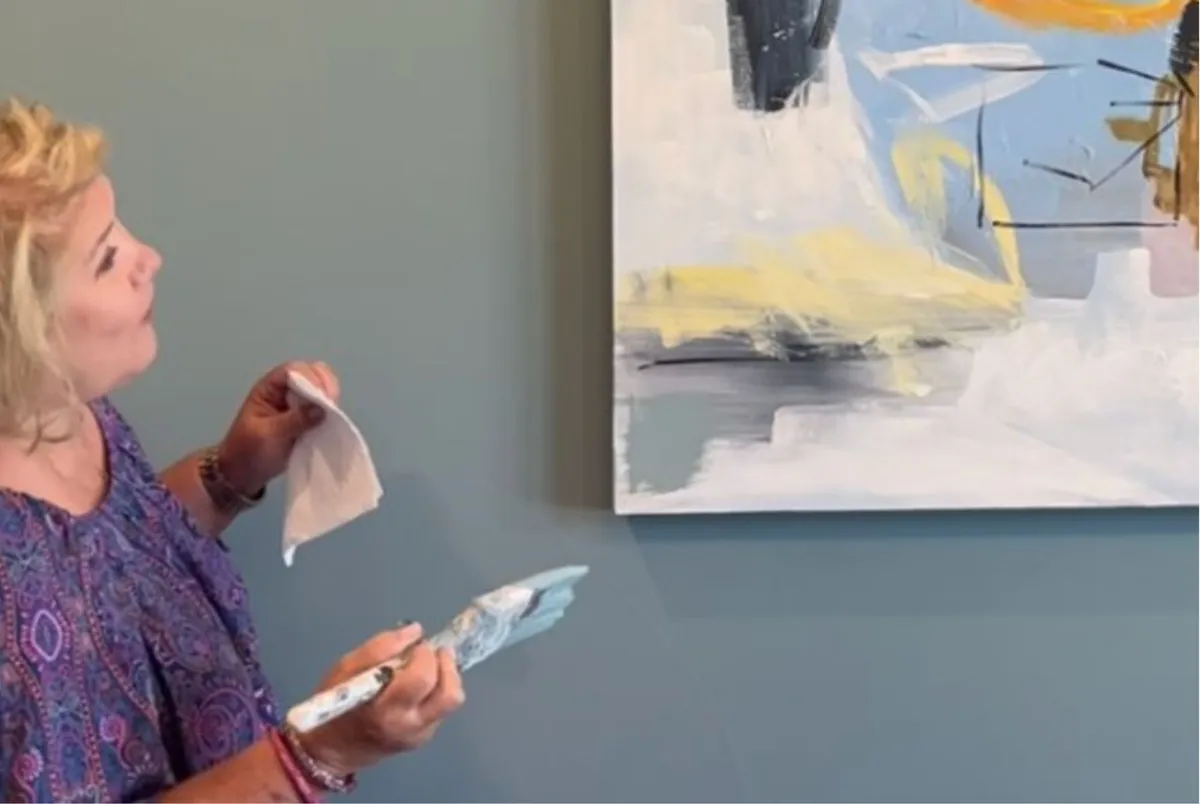
I've altered inexpensive artwork to make it work better in a room—including strategically changing colors so the piece related more beautifully to its surroundings.
But there's an important distinction: don't alter original, valuable, collectible, signed, or sentimental artwork without consulting the artist or an appropriate professional. Sometimes the imperfection or unexpected color is exactly what makes original art special.
The Best Artwork Tells Your Story
When I walk into someone's home, I don't want to see artwork chosen simply because it matches the sofa. I want to see something that tells me a little about the people who live there.
Where have you traveled?
What makes you smile?
What have you collected?
What do you love?
Those pieces give a home its soul. So the next time you find yourself saying, “I love it, but it doesn't match,” don't give up on it.
Change the frame. Move it. Mat it differently. Surround it with something unexpected. Pull one of its colors into the room. Or simply let it be the wonderful piece that doesn't match at all. Because the most interesting rooms aren't perfectly matched.
They're collected, personal, and filled with things you love.
Good Design Changes Lives.


